
The government package for public sector banks, announced last Friday, has been welcomed by the stock market with the PSU banking index booking smart gains.

Since 2000-01, the Indian economy has shown the tendency of being unable to absorb all domestic savings as investments.


The Economic Survey was tabled in the Parliament on Friday.

'This solid verdict would further strengthen his resolve to drive forward the economic agenda to ensure that the fruits of the economic momentum continue to reach the poor, so visible during the last five years.'
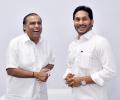
'We would like to develop Andhra Pradesh into a logistics hub not only for India, but also for South Asia.'

Jaitley promised higher investment in roads and railways.

What the INDIA alliance needs is neither a counter to Modi's tall personality and undiminished charisma nor a counter-narrative to his Hindutva agenda, now centred on the Ayodhya temple consecration on January 22, argues N Sathiya Moorthy.

'We will see a lot of investments from the private sector.' 'As long as we are not impacted by some global events, I think we will be in a strong place.'

P Chidambaram said to be able to play a meaningful role in the global governance, the G-20 agenda should be sharper and focused only on those issues on which it can make a distinctive contribution, particularly, on economic and financial matters.

Singh made the remarks while addressing a "CEOs' Roundtable" at the 14th edition of Aero India at the Yelahanka Air Force station complex on the outskirts of Bengaluru.
Real estate biggies unhappy with status quo on RBI rate cut.

Stock markets in structural bull run but there can be bouts of volatility says Ravi Gopalakrishnan, head, equities, Canara Robeco Mutual Fund

Over 15 years, with seven per cent growth, the Indian economy will be three times bigger.

Right to apprenticeship, legal guarantee for MSP, passing a constitutional amendment to raise the 50 per cent cap on reservations for SCs, STs and OBCs, a nation-wide caste census and scrapping of Agnipath scheme are among the promises made by the Congress in its Lok Sabha polls manifesto released on Friday.

The eGoM, headed by External Affairs Minister Pranab Mukherjee, is likely to take up issues including demand from developers to revise the 5,000 hectare land ceiling for one SEZ.
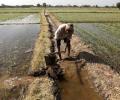
The average land given to the rural landless is small and falling, from 0.95 acres in 2002 to 0.88 acres in 2015 - a 7.4 per cent drop over 13 years-and a slowdown is evident in the process of taking land away from rich landlords, the RTI data reveal.
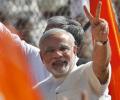
Even as India continues on the priority watch list of the Office of the US Trade Representative, strong voices from Washington, DC, have spoken out in favour of India, reports Aziz Haniffa/Rediff.com.

External Affairs Minister S Jaishankar has met United States Defence Secretary Lloyd Austin and held a productive conversation with him on deepening bilateral defence cooperation, including in the co-production of defence articles, and exchanged perspectives on a variety of security issues.

Gorbachev was the last leader of the Union of Soviet Socialist Republics (USSR).

Prime Minister Narendra Modi addressed the nation from the ramparts of Red Fort in New Delhi as India celebrates the 72nd Independence Day. This is Modi's fifth and final address as PM in the current tenure. During his speech, Modi reflected on the achievements of the National Democratic Alliance government and presented a report card of his four-year tenure. Here are the main takeaways from his address:
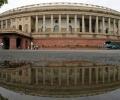
A reformed Planning Commission should reflect the diversity of Indian debate.
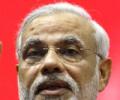
In 2013, India was Singapore's 11th largest trading partner and 12th largest export destination, with total trade volume of 25.5 billion Singaporean dollars ($ 20.36 billion).

Indian fintechs and associated entities are hoping that the Union Budget 2024 will provide a boost and empower firms to extend their reach beyond Tier-II regions, with an emphasis on supporting enterprises led by women. The fintech industry, which has witnessed regulatory reforms over the last year, expects the Budget, scheduled to be presented by Finance Minister Nirmala Sitharaman on February 1, will further encourage financial inclusion, empower micro-small-medium enterprises (MSMEs) with lending solutions, and push for upskilling initiatives for the country's young workforce.

Prices may go up because of higher energy costs, caused by the rise in shipping charges, with commercial vessels taking a longer route to avoid the troubled Red Sea region, the finance ministry said on Monday. Iran-backed Houthi rebels of Yemen are repeatedly attacking ships in the Red Sea. While the global economy is grappling with challenges such as sticky inflation, sluggish growth, and mounting fiscal pressure, India's external sector could face "potential risks" due to the ongoing geopolitical tensions, according to the finance ministry's report on the review of the Indian economy.

Although the first woman to hold the position of chief economist at IMF, it would be wrong to see her appointment through the lens of gender

External Affairs Minister S Jaishankar on Wednesday held wide-ranging talks with his Russian counterpart Sergey Lavrov focusing on the Ukraine conflict, bilateral ties and issues relating to the G20 foreign ministers' meeting.

Rajasthan has taken the lead on structural reforms which could help India attract business and employ a fast-growing workforce.

'Modi has sowed the seeds of a transformational change.' 'For the sake of the nation and our children I hope he succeeds.'

Indian equity markets have a limited upside potential in the near-term as they negotiate the ensuing cyclical slowdown, wrote analysts at Nomura in a recent coauthored report led by Saion Mukherjee, their managing director and head of equity research for India. He, however, believes that the foundations are in place for sustainable growth over the medium-to-long term, and hence suggests a 'buy on dips' strategy to equity investors. As an investment strategy, Nomura prefers domestic-oriented sectors and companies over exporters, and prefers stocks that provide valuation comfort. Industrials and banks are their overweight sectors, while IT services and consumer discretionary are their underweight sectors.

'Das is friendly, but he finally does what he does. The quality of engagement is very good.'

BJP president Rajnath Singh has said that if the party comes to power in the next general election, its foreign policy wouldn't be much different from that of the Congress government. Aziz Haniffa in Washington

In his opening remarks at the virtual summit of the Shanghai Cooperation Organisation (SCO), Modi also said that some countries use cross-border terrorism as an instrument of their policy and the grouping must not hesitate to criticise them.

Armed with necessary macro and micro growth drivers, India is on its way to becoming the fastest growing major economy in the world, a finance ministry report said. Rapid vaccination and teeming festivities will push India's ongoing recovery resulting in narrowing of demand-supply mismatches and greater employment opportunities, as per the monthly Economic Review prepared by the ministry.
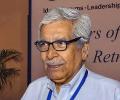
For Yoginder, it is a release from pain. But for us, his friends, it is the loss of a warm and generous life companion, says Nitin Desai of his 50-year association with the eminent economist who passed into the ages on December 6, 2022.

Domestic financial institutions and mutual funds on Wendesday pitched for rationalisation of tax provisions to improve ease of doing business in the country.
.jpg)
Privatising public sector companies would have encountered significant opposition from their managers as well as from strong unions.

The central bank measures though are also taking a toll on the banking sector, which is heavily reliant on short-term money markets for capital.

'Somebody was using somebody to make statements that will stir the stock market and lead to a surge.' 'A sudden surge and a sudden crash is always an ideal situation for people to make illicit gains and then siphoning off the money.'
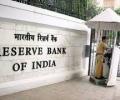
More steps are necessary to accelerate speed.
